



Yoder Smokers 24" Loaded Kingman Offset Smoker
Only a few left Order soon
Request a Freight Quote
This one comes with the white glove treatment. Call us and our experienced team will personally walk you through pricing, delivery, and everything that comes after.
Please fill out the form below and we will get a quote back to you.
Verfügbarkeit der Abholung konnte nicht geladen werden
Description
Description
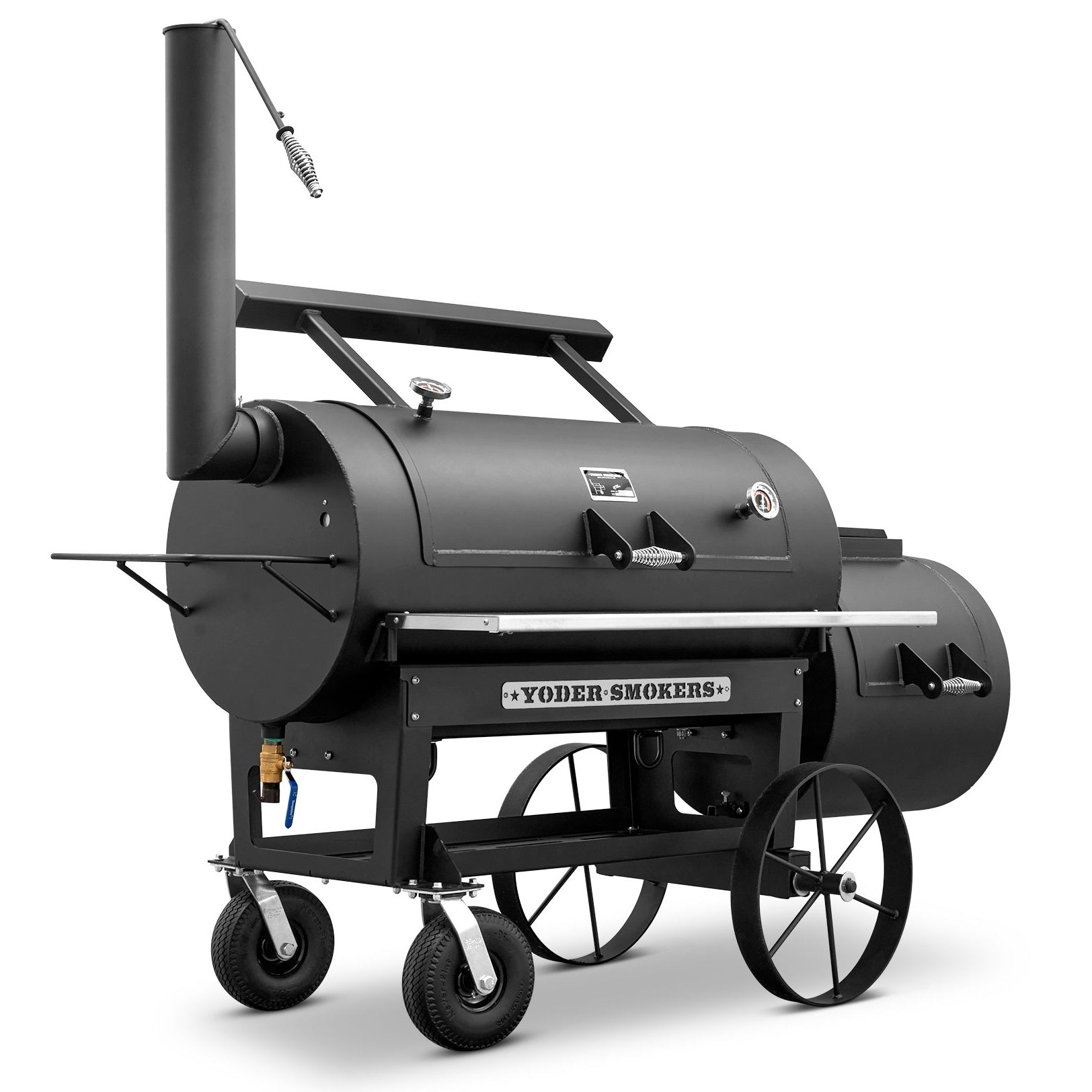
24 inch offset smoker is the perfect solution for those seeking the authentic wood-fired cooking experience. The Kingman is a true, classic offset smoker—built for those who want to run a true wood fire with expanded cooking space and the control that defines traditional barbecue. This backyard offset smoker allows you to take command of fire, airflow, and smoke—the essential elements of wood-fired cooking.
Manufactured in the USA and shaped by decades of hands-on pit building, the Kingman reflects a standard earned over time and proven in real-world use. As an American-made offset smoker, it carries forward a legacy of craftsmanship while offering a larger-format wood smoker designed for higher-capacity cooks. With features engineered to ensure clean flow and even heat, the Kingman is designed to handle everything from individual briskets to full loads with precision.
At its core, this 24 inch offset smoker is equipped with a traditional offset firebox—built to burn real wood or charcoal, producing clean, consistent thin blue smoke. With a 24″ x 52″ cooking chamber that delivers an impressive 2,240 square inches of cooking space, it provides substantial capacity for larger cooks while maintaining balanced airflow across the entire pit. The extended exhaust stack enhances natural draft, improving combustion efficiency and helping to regulate steady temperatures from end to end.
- Fine-tune heat distribution
- Open the chamber for increased airflow
- Create more direct heat when needed
- Versatile use as both a low-and-slow smoker and a responsive charcoal and wood smoker
The flexibility of the Kingman allows you to adjust for varying cooking techniques as needed. Constructed from 1/4-inch steel, this heavy-duty backyard offset smoker is built for thermal stability—holding heat through long cooks and responding predictably to fire management adjustments. Inside, high-quality 304 stainless steel cooking grates provide long-term durability and expanded cooking space.
Moreover, the rugged stand paired with 10″ casters creates a stable, maneuverable platform for real-world cooking conditions. Whether you're adjusting for wind, managing fuel, or settling into a long cook, the Kingman remains responsive and easy to work around, delivering the control, capacity, and durability expected from a high-performance stick burner.
Specs & Build
Specs & Build
Pickup & Delivery
Pickup & Delivery
Use the freight quote form on this page and we will reach out with your delivery cost and timeline. Larger, heavier grills cost more to move, and we shop rates with our carriers to keep freight as reasonable as we can. Prefer to pick it up? We will let you know which location has it in stock, either The Kansas City BBQ Store in Olathe or American Fire BBQ in Lee's Summit, and have it staged and ready for you.
See our Freight Policy for full details.
Questions? Call us at (913) 782-5171.
Our Promise
Our Promise
Buying a grill like this is a big decision, and we treat it that way. When you reach out, you talk to a real person on our team who cooks on this equipment, knows it inside and out, and will walk you through every option before you spend a dime. No call centers, no scripts, just straight answers from people who barbecue.
Once you order, we handle the details personally. Every grill is inspected before it leaves our hands, and if you ever have a question down the road, you call the same store that sold it to you. We're a family-run shop, and our name is on every order. If something's not right, we make it right.

Family Owned Since 2006
The Kansas City BBQ Store is a family-owned small business with deep roots in Kansas City barbecue. It was started by the family behind the famous Oklahoma Joe's, and is now owned and operated by the family behind American Fire BBQ — two generations of pitmasters carrying the same tradition forward.

Some grills are worth doing right
This is the kind of cooker you buy once and hand down. Every one we deliver gets the full white glove treatment: a dedicated freight quote, careful crating, and a team that makes sure it arrives ready to fire. Tell us where it's going and we'll handle the rest.

NEED HELP?
Talk to Our BBQ Experts
Get honest advice from a team that lives and breathes BBQ. We're here to answer your questions and help you choose the right product before you make a purchase.
FAQs on these grills
Have a question we didn't cover? Our team is quick on email.
How does ordering work for a grill like this?
How does ordering work for a grill like this?
Every cooker at this level gets a personal touch. Send us a quote request with your delivery zip and our team puts together exact freight pricing, delivery timing, and setup options for your specific order. Most quotes go out same day or next business day.
What does delivery look like?
What does delivery look like?
These ship freight, fully crated and protected. Your quote covers curbside delivery, and we can walk you through liftgate service or extra help getting it into position. We coordinate the timing with you so you're never guessing when a truck shows up.
Can I pick it up instead?
Can I pick it up instead?
Absolutely. We have locations in Lee's Summit, MO and Olathe, KS, and picking up in person is a great way to skip freight entirely. Let us know in your quote request and we'll have it ready.
How do I know which model or size is right for me?
How do I know which model or size is right for me?
That's exactly what we're here for. Tell us how you cook, how many people you feed, and what you're working with for space. Our team cooks on these things and will give you a straight answer, even if it means pointing you to a smaller pit.